Have you ever found yourself nodding along in a conversation, only to realize you haven't caught what the other person said? Perhaps you follow conversations easily when it's quiet at home but struggle in a busy restaurant, at a family gathering, or when several people are talking at once.
You're not alone. Difficulty understanding speech in noisy environments is a common concern, and it can sometimes be an early sign of hearing loss.
Hearing Speech Isn't the Same as Understanding It
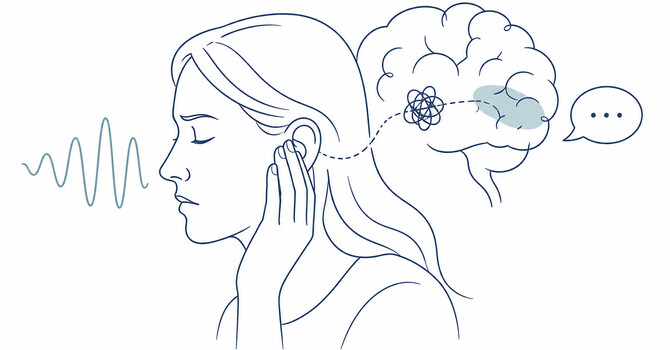
Hearing involves more than detecting sound. Your ears collect sound, and your brain processes that information so you can understand words and follow conversations.
When hearing changes occur, speech may still sound loud enough, but important details can become harder to distinguish. High-frequency sounds, including many consonants that help us tell words apart, may become less audible. You might hear someone speaking but miss the difference between similar-sounding words.
This is one reason people sometimes say, “I can hear people talking, but I can't make out what they're saying.”
Why Is Background Noise So Challenging?
In a quiet room, speech may be relatively easy to follow. Add background music, clattering dishes, or several conversations, and listening becomes more demanding.
When hearing is reduced, the brain may have to work harder to make sense of the speech it receives. You might find yourself concentrating intensely, watching people's faces for clues, or asking others to repeat themselves.
Over time, this extra listening effort can become tiring. You may feel exhausted after social gatherings or begin avoiding situations where following conversations is difficult.
Could It Be Hearing Loss?
Difficulty understanding speech in background noise can be associated with hearing loss, even when everyday sounds still seem loud enough. Other clues may include:
-
Frequently asking people to repeat themselves.
-
Finding group conversations more difficult than one-to-one conversations.
-
Turning up the television volume more than others prefer.
-
Missing parts of conversations, especially when someone speaks from another room.
-
Feeling mentally tired after prolonged conversations.
These experiences don't automatically mean you have hearing loss, but they are worth paying attention to. A hearing assessment can help determine whether changes in hearing sensitivity may be contributing to the difficulty.
What Can Help?
A few small changes can make conversations easier:
-
Choose a quieter setting. Reduce competing noise whenever possible.
-
Position yourself strategically. Sit where you can see the person speaking and keep background noise behind you when practical.
-
Face the speaker. Visual cues, including facial expressions and lip movements, can support understanding.
-
Let others know what helps. Asking someone to face you or rephrase a sentence can be more useful than simply asking them to speak louder.
If hearing loss is identified, appropriate hearing aids may improve access to speech and make conversations easier to follow. Modern hearing aids offer features designed to help manage background noise, although challenging listening environments can remain difficult even with amplification.
When Should You Have Your Hearing Checked?
If you regularly struggle to follow conversations, particularly in noisy environments, consider booking a hearing assessment. You don't need to wait until hearing seems significantly reduced to seek advice.
A comprehensive assessment can help identify changes in hearing sensitivity and provide guidance on appropriate next steps. If your hearing test does not fully explain your listening difficulties, further evaluation may be worth discussing with your audiologist.
At Sound Audiology, we provide hearing assessments and personalized hearing care in Victoria and the Saanich Peninsula. If conversations have become more difficult to follow, we're here to help you understand your hearing and explore options that suit your needs.
Because hearing well isn't just about hearing sounds — it's about staying connected to the conversations and people that matter most.